Major donor outreach isn’t easy. When you have success, it feels great. But more often, your efforts to make contact and get a conversation going are met with silence. This leaves gift officers wondering what they did wrong.
And it’s nearly a universal experience. I asked my LinkedIn followers – 20,000 at that time – how many outreach attempts they typically have to make before landing a meaningful meeting with major donor prospects.
70% of respondents said it took more than four outreach attempts. 25% said more than seven.
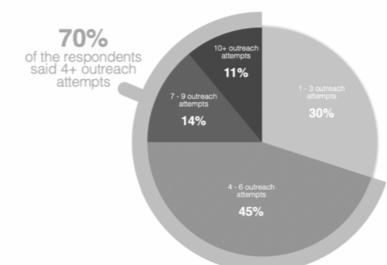
Your average may be different. If you start documenting each outreach attempt – email, phone, or other media channel – you can determine your average.
Knowing this is helpful because it empowers you to turn a perceived negative into a positive. If it takes an average of five outreach attempts to land a meeting, then you can chalk up the first four non-replies as part of your process. You’re just getting through these non-responses so you can get to the meeting. It takes the feeling of rejection away.
Overcoming Donor Resistance
Before we talk about the six reasons why major donors ignore outreach attempts, it’s worth mentioning that there’s a way to reduce the number of times you get ignored.
By using automated donor cultivation and pre-qualification, donors get to experience authentic engagement on their terms and timeline, and in ways that are valuable and respectful to them. This approach removes large portions of the responsibility for qualification from the gift officer, and waits until the automated systempre-qualifies the donor as being ready for outreach.
This happens after they have given explicit permission to be contacted, or have said they’re open to it.
With this approach – which is why MarketSmart exists – you’ll only be making outreach to major donor prospects who want to hear from you and have said so. Nonprofits benefiting from our approach and software do not get ignored.
See how our engagement fundraising system works in this video.
Why Donors Ignore Outreach Calls
Whether you use an automated pre-qualification system or not, you still have to make calls, and you will still have to leave voicemails and try to make a connection.
Here are six reasons why donors – even good prospects – sometimes ignore your outreach efforts.
1. You didn’t give them a good reason to call back
Vague, generic voicemails and outreach attempts don’t often receive a response because donors see no value in responding. “What’s in it for me?” they’ll ask themselves.
Your voicemail might sound like this:
“It’d be great to chat with you sometime.”
“I’d love to update you on what’s happening.”
“I’m having pasta for dinner. What are you having?”
The third one is a joke of course, but it’s still more interesting than the first two. “It would be great to chat”? For who? “Sometime”? So, is five years from now okay?
And most people fear that an update will actually just result in an ask for money.
There’s no resonance because there’s no value offered. It’s simply too easy to ignore messages that don’t give any compelling reason to make a response. And this is true with phone calls as well as emails, texts, and LinkedIn messages.
People are busy. If you don’t give them a good reason to return your outreach, they won’t.
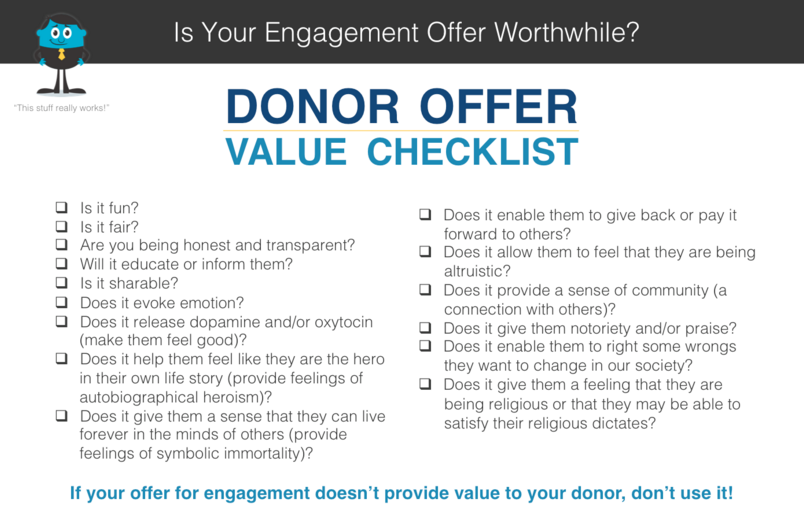
Give them something of value they can have if they call back. Here’s a checklist you can use to make sure what you’re offering is valuable:
2. They don’t trust you
Even if they’ve been properly pre-qualified through automation software and given permission for outreach, they still don’t know the person who calls them. There is a trust deficit inherent to any new relationship. We call it the Valley of Distrust. This valley can be made less deep through software, but it will still be there.
You are not entitled to an appointment with them, and they have plenty of reasons for not trusting you – especially if they are quite wealthy. Many wealthy people screen their calls through gatekeepers because they’re tired of being asked for money from everyone’s cousin.;
Make a clear, personalized, relevant offer in your outreach attempts. Remind them of their past engagement and the permission for outreach they gave, if any. Don’t assume anything, and don’t give them a reason to mistrust you.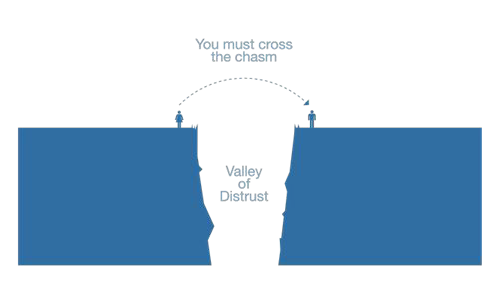
3. No downside to not calling back
This is a simple practical reason. When faced with a choice to call someone back or not, the simple fact is, not calling them back is easier. Doing nothing means we just keep living our lives and nothing changes. Calling back will take time and social energy, and people are busy.
Many of your supporters don’t call back due to this form of self-preservation.
Your job in outreach is to make them feel like they’re missing out on something good if they don’t call back. Make it seem more costly to not call back.
Here’s an example of how this might look:
A local city orchestra invited VIPs who signaled interest to meet the institution’s musicians backstage after a performance. Here’s what the gift officer said in their outreach call:
“One supporter like you who responded to my invitation joked that she figured the experience might be so magical it would be ‘too harmonious’ to miss. I hope you feel the same way, and can find the time to attend. This is a pilot project of mine. We might never do it again. But since you expressed interest in being involved in new ideas, I thought you’d want to participate.”
Notice how the call includes the fear of missing out in the phrase “we might never do it again.” Not only is the offer valuable to a supporter of this type of charity, but it might be the only time they ever get this opportunity.
Come up with ideas for things to offer that your supporters will want, and you’ll see far fewer of your calls being ignored.
4. Bad prior experiences with fundraisers
This is a tough one, because it can result from past experiences with fundraisers from completely different organizations or eras. If previous fundraisers have treated this person like an ATM and didn’t care about their personal lives, interests, or motivations for giving, it will be strange to them and hard to believe that you might be different.
Or, maybe they gave to an organization at one point and never heard a thing. Feeling ghosted, they are now hesitant to repeat the experience.
These fears and apprehensions are real, and you have to respect them and simply do what you can to show that you are different.
5. They think they can handle this on their own
Many major donors have no idea of the value a gift officer can provide, and think they can make their giving decisions on their own. Some donors prefer it this way even after working with a gift officer, and in those cases, you may have to just leave them on their own.
But in other cases, you can make some effort to show them the value you can provide that will appeal to different types of donors. A few benefits you can offer include:
- Get an insider view of the charity with a VIP experience
- Have your voice heard about projects we’re considering
- Get guided help sorting through opportunities to make meaningful change
- Others who have worked with a gift officer have been very glad they did
- Personal advocacy for your interests
- Empower you and your advisors to make informed decisions about giving assets
6. Never got your message
This last one is the most frustrating, but also the one that has little to do with your abilities as a gift officer.
Put simply, some people just never listen to their voicemails. Or if they do, they do it weeks after the fact when they realize they have ten messages or their inbox is full. For email, some people hardly open any emails, or they gave you an account they use for commerce and hardly check it.
This is why persistence in outreach is so important. For donors like this, you’re probably not going to get a response, and your best hope is for them to actually answer your call on the spot. Keep calling until this happens, and keep using multiple channels like email and LinkedIn to stay on their minds so when you do call, they’ll recognize you.
And again, if you’re using fundraising automation such as MarketSmart, many of these donors will be engaged through our system because they gave consent to receive emails and indicated they want to hear from your organization.
You can engage far more major donors and prospects through an automation system than your gift officers could ever manage on their own.
Watch this video to see how it works
Related Resources:
- Why what you do is called ADVANCEMENT
- 5 Steps to Take As You Prepare For Outreach to Major Giving Prospects
- The 4 Habits You Need to Develop for Productive Major Donor Outreach
- How to Determine Which Prospects Are Prioritized for Outreach