We all know the value of networking. We also all know that some of your best and most valuable donors can be found among the people you already know. Especially board members and wealthy donors.
Surely, they know people who have money. So why don’t they refer any of them to your nonprofit?
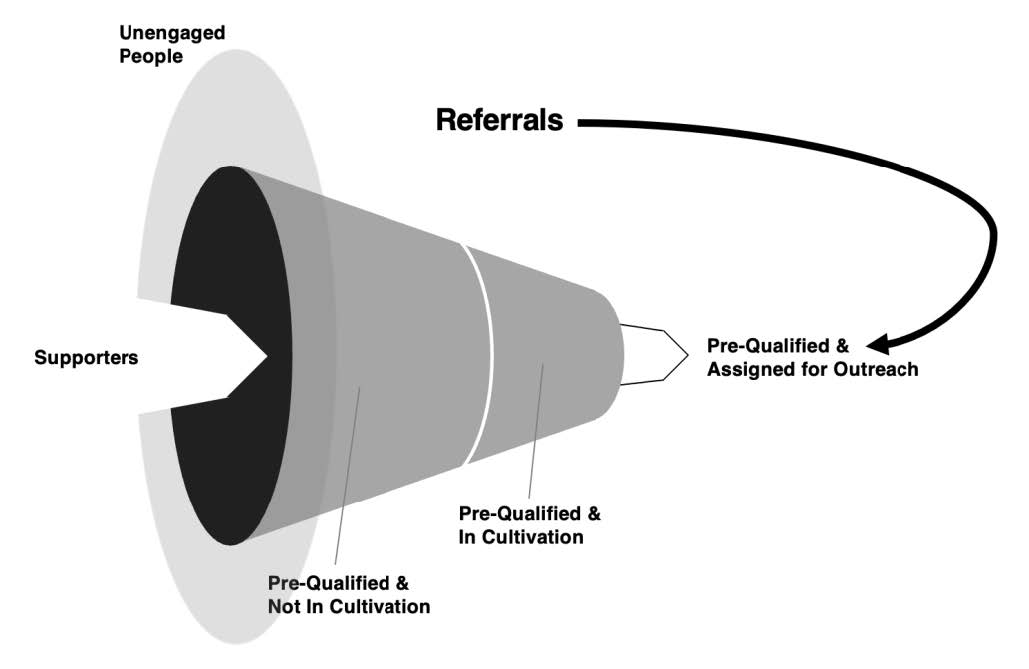
We’ll get to that in a moment. You want referrals, because when they come in, they’re generally easier to cultivate because they already have a personal connection with your organization. You can often bypass many of the typical pre-qualification and cultivation steps in the major gifts fundraising process, as this diagram shows.
And if your board and wealthy donors already know these people, what’s stopping them from referring them to your gift officers?
5 Obstacles to Getting More Major Donor Referrals
First, it’s important to recognize that you aren’t entitled to any referrals. And just because someone knows your wealthy donors or board members, they aren’t obligated to do anything for you. But still, especially for people with large networks, there ought to be a way to get more referrals from your board and wealthy donors.
We’re going to look at the five main obstacles to getting referrals from your board and your wealthy major donors. As we go, we’ll talk about what you can do to combat each obstacle and increase your chances of winning more referrals.
Lack of Enthusiasm or Motivation
Some of your donors may not have had the greatest experience themselves in dealing with your fundraising process. But, because they care about your cause, they pushed through it. Same with your board members.
If that’s the case, it can be difficult for them to get excited and motivated about telling their friends and people in their network to consider making a major gift. They didn’t enjoy the process, and they worry it will reflect badly on them if their friend has a similar one. Money can break relationships.
There are numerous other reasons people can be unmotivated to tap their networks for philanthropy.
What you can do
Work on making the philanthropic journey more fulfilling and gratifying for donors, and they will be more likely to share their experience with their friends.
We write about this topic all the time, because so many nonprofits still treat donors like ATMs. They use mass mailings for hyper-specific major donor segments. They fail to thank in sincere ways. They don’t communicate with personalized approaches. They don’t respond to feedback or questions.
There’s a lot you can do to improve the donor experience.
If you make this a priority, you can dramatically transform it, and this will lead to more referrals eventually because more donors will want to talk about it with people in their networks.
One great way to start is to use MarketSmart to pre-qualify and cultivate potential major donors. Our automated system delivers personalized communication to each prospect. It is responsive, proactive, customized for each donor, and lets you know when a donor is ready for outreach from a human gift officer.
No Understanding of Their Friends’ Motivations
Many of your most committed major donors and board members are well aware of why they care so much about your mission. They know why they care, and how your cause aligns with their values, their life stories, and their communities.
However, they may feel like they don’t know any of this about the people in their networks. It makes them feel tongue-tied when they think about bringing up the idea of giving to your organization. What do they say? They don’t know where to start.
What you can do
You can alleviate this fear by creating a series of suggested questions and conversation-starters centered around giving. The idea is to empower your board and your wealthy donors to feel confident about raising the topic of giving. Once they get these conversations going, they’ll be able to learn what their friends care about and what motivates them as it relates to giving.
Eventually, they’ll be able to identify people who are potential donors for your cause. Here are some donor identity questions that might help you get started with this.
Concerns about How Their Referrals Will Be Treated
Some of your wealthy donors and board members have also given or served with other organizations. Maybe they had a bad experience there when they tried to make referrals, and lost friendships over it, or were put in an awkward position. For example, maybe they kept getting hounded with questions like “Who do you know?” and “Can we call them?”
They might be worried about subjecting their friends to aggressive and high-pressured fundraising tactics. Or, that they’ll be catalogued and run through the grinder, treated like any other major donor prospect, and not receive a personalized experience befitting someone who already has a personal connection.
What you can do
You can address these concerns by developing a clear process for how your organization handles referrals, and you can show referral partners how this is very different than your process with other donors and supporters. Explain this process to your board and wealthy donors when you ask them to make referrals.
When you do, emphasize how important it is that the donor’s interests align with the values and mission of your organization. They don’t need to refer someone they know has no interest in your cause just because that person has “money”. Also, make sure they know that the timing has to be right in the donor’s life to make a gift, and that they won’t be pressured to do anything.
Also, ask your board and wealthy donors for feedback on your referral process and how their friends will be treated. This builds trust, especially if you take their feedback seriously.
Fears about Quid Pro Quo
Some board members and wealthy donors may worry that if they ask people in their network to explore making a gift to your organization, those people will then ask the same thing in return. And they may not want to get into this sort of mutual back-scratching kind of arrangement.
What you can do
This one is harder to overcome, but you can offset it somewhat by emphasizing that you’re only looking for people who already have a passion or personal interest in your cause and the issues it addresses. You’re looking for people whose lives and values align with your mission. It’s not just about the fact this person has some wealth.
Referrals should only happen if there is a genuine alignment of these things. If they restrict their invitations to people like this, there’s less likely going to be any quid pro quo.
Lack of Know-How
Lastly, some board members and wealthy donors simply don’t feel confident about knowing what to say or how to start conversations about giving major gifts. They don’t know what to do. This is more than just having a few questions to ask. It’s about knowing what happens next, where to send their referrals, what happens after that, and more.
What you can do
Board members and donors who feel this way simply need your help to feel equipped for the task. You can give them tools and assets such as:
- Personalized introduction messages for voicemails, emails, social media, etc
- Overview of how your fundraising process works
- Contact information for the people on your staff who get them started in the process
- Ongoing guidance and support as needs arise
- Questions that allow people to reveal their values about giving, interests, and values
An introduction to your organization does not need to entail a commitment to give, or an assumption that this will happen. It’s just an exploration. Make sure they know and can truthfully tell their friends that this is not a high-pressure situation.
Here’s a treasure trove of fundraising questions for each stage of a fundraising conversation or relationship.
A Couple More Things
Lastly, you want to instill confidence in your board, and for them to know you are serious and committed to getting more referrals. So, ask if you can check back at the next board meeting on how they’re doing with all this.
This will communicate to them that you want them to make efforts to get referrals. And if you have empowered and equipped them using the suggestions in this article, they should feel more confident in doing so.
And, what about when they start making actual referrals? What should you do?
First, you should ask the referrer if it’s okay to publicly commend them. You want to ask them because they may not want to be called out, even for doing something good. But you want to call them out because their success will inspire others to feel like they can succeed at this too.
If they don’t want to be publicly recognized, you still want to be sure and sincerely thank them for their efforts – especially if the person they refer does eventually make a major gift. This is a huge win!
Put these suggestions into practice, and over the coming years, you should expect to see more major donor referrals than you’re getting now.
Related Resources:
- From Head to Heart: Teaching Board Members the Power of Emotional Intelligence in Fundraising
- The Downsides of Asking Boards to Help With Fundraising
- Why Nonprofits Should Choose Growth-Minded Board Members Over Traditional Professionals
- It’s too bad that nonprofit leaders and board members thwart risk-taking