This is a classic good news / bad news scenario. The good news is, we have way more pre-qualified major donor prospects than we’ve ever had before. Hooray! The bad news is, how in the world are we going to contact them all?
Admittedly, this is a good problem to have. For many organizations, it’s the opposite – not enough high quality leads. They use a traditional methodology and assign donors without their permission or knowledge. That leads to wild goose chases. Our research shows that, on average, two-thirds of assigned donors are not truly ready or willing to enter into a relationship with a fundraiser.
But once you start using high-level fundraising automation like MarketSmart, the ‘good problem’ of this blog article is a real possibility. It can happen because our system engages and nurtures far more donors and prospects than you can effectively follow-up with using human gift officers. With so much high-quality follow-up, more donors might respond than you expected.
So, what do you do?
Celebrate the Win
The first thing to do if you find yourself in this positive predicament is to stop and bask in it. Enjoy the feeling of having too many leads. You’re in the rainforest, and have finally escaped the desert.
Fundraising is hard, so when you get some good news, don’t blow it off, and don’t get all worried about all the challenges this new scenario poses. First, just celebrate the win.
Consider Hiring A Lead Outreach Associate Instead of More Gift Officers
If your bevy of pre-qualified prospects has resulted from a source such as MarketSmart’s engagement fundraising system and you believe this deluge might continue, you might want to hire some more people.
Perhaps one or two more gift officers can be brought in to make outreach and follow up with these leads. Or, you could hire a lead outreach associate, a position MarketSmart advocates for that supports your gift officers while relieving them of some of the early follow-up tasks. Jim Langley famously prefers to call this person the President’s Liaison. I like that title.
Realize the Truth – Not All Are Outreach-Ready
This is the big one. Yes, celebrate. Yes, consider new hires. But you also need to not get too caught up in the numbers.
Sure, you have a bunch of pre-qualified prospects. But how many of these people are actually ready to hear from one of your gift officers? There’s a good chance it’s a small fraction, and we have some data to show you that backs this up.
So before you do anything too crazy, let’s make sure we know who these pre-qualified major donors really are.
Donor pre-qualification data from a real charity
To demonstrate why pre-qualified prospects aren’t all ready for outreach, let’s look at some data from a well-known disease-related charity MarketSmart has worked with. They ran a self-qualification campaign using our system where donors and prospects engage with our automated software and get scored for their readiness for outreach based on a variety of behaviors and metrics.
Here are the numbers.
726 people self-qualified as interested in giving assets. This means they want to give something other than cash – which is good, because most wealth is contained in assets.
At first glance, it’s easy to exclaim, “Whoa! 726! How are we going to follow up with so many?”
The reality is, this charity didn’t need to. Looking closer, here’s what else the data revealed:
- 168 had already given gifts of assets at least once
- 196 said they were likely to give assets at some point
- 362 said they were somewhat likely to give assets
- Only 113 expressed openness for outreach from a gift officer
- Only 25 had engaged with online content related to major giving recently
Considering these figures, you can see that about half of the pre-qualified prospects were only just somewhat likely to give assets to this charity. These people do not need to be contacted by a gift officer yet. They’re not ready to give, and will probably resent the call. Let the automation continue to cultivate the relationship.
Another sizable portion had already given. These people should receive follow-up communication and stewardship, but we’re talking about new leads.
Most importantly, only 113 explicitly said they were open to hearing from a gift officer. That’s a much smaller list. And of those, only twenty-five actively engaged online. If you had to pick twenty-five pre-qualified prospects to call first, you’d call some of those.
To be fair, 113 is still quite a lot. If you have good responses from even a third of these, that’s about 40 new people. For major giving, that sounds like a new gift officer if you’re being realistic about caseload size. But, can you do more to prioritize this list even more?
Before answering, let’s also view the planned giving data from the same charity. The numbers are similar.
Planned giving data
749 people expressed some level of interest in planned giving. Once again, the data reveals a smaller share of truly outreach-ready donor prospects:
- 101 had already prepared their planned giving
- 60 said they were interested
- 81 were definitely considering planned giving
- 507 said they would possibly consider it
- 66 said they were likely or somewhat likely to want to hear from a gift officer
Like the data for giving assets to this particular charity, only a small fraction of pre-qualified prospects also wanted to hear from a gift officer. Just 66. Also, like before, the 101 who have already planned to give should definitely receive follow-up communication, since preparing a planned gift doesn’t always mean the follow-through happens, which is sometimes years later.
All that said, once they’ve reached out to the 66, others will probably have moved forward in their consideration and will also be ready for outreach.
So the question remains – how do we prioritize which outreach-ready prospects to reach out to first?
Let Cultivation Run Its Course
Because not all pre-qualified prospects are ready for outreach, let your cultivation process continue to nurture these people. With MarketSmart, this basically means you keep standing back and let the automation do the work while you pick off the most engaged and active qualified prospects.
The fundraising automation will keep the pre-qualified prospects ‘warm’ while you reach out to the ones you choose first.
Prioritize Which Prospects to Reach First
Here are some ways to prioritize which prospects to contact first – even among those who say they want to be contacted.
Prioritize prospects who arrange their own meeting
Anyone who takes the initiative to schedule their own meeting with your outreach team is clearly ready for outreach. Put them at the top of the list. This is called ‘low-hanging fruit’. Don’t neglect it.
Prioritize prospects who signal readiness for outreach
Right below the first group are those who tell you they want someone to reach out to them. These people are telling you they want to be called. So, call them.
Sort prospects by recency of engagement
As seen in the data earlier, other pre-qualified prospects are highly engaged with your online content. To know this, you need a fundraising automation platform that can measure what we call digital body language – the online activity of the supporter.
A highly engaged supporter who is also pre-qualified for major gifts outreach should be prioritized over most other pre-qualified supporters.
Why?
Because active engagement means they’re thinking about you and care about your mission and content. You’re on their mind. Strike while the iron is hot.
Map prospects by proximity to your organization
Next, you can map prospects based on where they live. For some national organizations, this might not matter. But for other nonprofits, location is key.
For example, major donor prospects who live closer to a college or university may be more likely to respond to outreach than ones who live far away. This of course isn’t a sure thing, but it’s a way to reduce the size of your list so you have a more manageable plan.
Filter prospects by various qualitative donor-driven data
With an effective fundraising automation platform, you can collect data on all sorts of other qualitative metrics for each supporter. When the time comes to decide who to reach out to first, you can use this data to sort your list into smaller segments.
Some donor-supplied data you can use to further prioritize:
- Interest in receiving outreach
- Supporters who ranked your organization as the top one they want to support
- Supporters who said your mission is very important for future generations
- Education level
- Occupation
- Age
- No living heirs
- Signaled interest in giving away property they own
You can see the value of each of these qualitative metrics.
People with no heirs have to decide what should happen to their money when they die. Those who own property have more wealth to give away than those who don’t. Older donors are more likly to give big gifts than younger ones – especially planned gifts of course. Certain jobs tend to be more generous than others.
If you have a large list of pre-qualified prospects, you might decide to call all the ones with no living heirs first. They will have fewer considerations regarding their wealth than other prospects who have families.
Don’t Prioritize in the Wrong Order
All the above strategies are great for prioritizing who to contact from a list of pre-qualified major donor prospects. But this is important – don’t forget that these other traits pale in comparison to what we call the Prioritization Pentagon – at the heart of the donor life cycle.
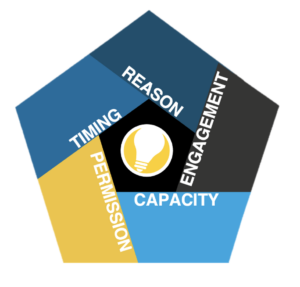
This refers to the five most fundamental metrics a prospect must score before they are pre-qualified for outreach. These are:
- Active engagement with your organization
- Wealth capacity according to the donor
- Strong emotional reason for giving
- Timing is right in their life to make a gift
- Have given permission for you to reach out
An aging supporter with no heirs, excess property, and who says your mission is important for future generations isn’t likely to be good for outreach if they don’t first exhibit all five of these traits.
This is in fact how MarketSmart’s system pre-qualifies donors. Once a supporter exhibits all these traits, the system then informs you that this donor may be ready for outreach.
See video for how fundraising automation works
Related Resources:
- 5 Steps to Take As You Prepare For Outreach to Major Giving Prospects
- The 4 Habits You Need to Develop for Productive Major Donor Outreach
- How to Determine Which Prospects Are Prioritized for Outreach
- The Smarter Way to Prioritize Your Major Donor Outreach: Let Prospects Reveal Themselves to You