Fundraising seems to be getting more difficult, and the problem is affecting the entire industry. Low-dollar donors are dropping out of giving altogether at an alarming rate. Meanwhile, major donors are picking up the slack. They are giving more. Plus, their retention rates have stayed relatively constant as low-dollar donors disappear (“donors down, dollars up”).
But how long can that last without an upgraded approach to raising major (including legacy) gifts? I worry that a reliance on traditional fundraising methods at all levels will leave many organizations in serious trouble within the coming years and decades.
For people who have worked in the industry for a long time – as in decades – this is a tremendous challenge that requires a pivot. A new fundraising approach is needed. One that is more relational and donor-driven, and less organization-centric and transactional.
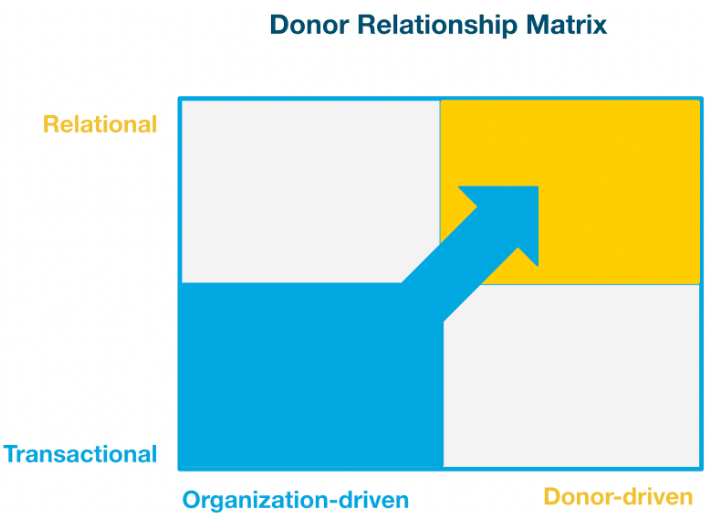
But before you can understand a new approach, you must first see the need for it. And that means taking time to learn why traditional major and legacy gift fundraising no longer works like it used to.
5 Reasons Traditional Fundraising Strategies Are Failing
MarketSmart works with a great variety of organizations helping them identify and cultivate major donor prospects. We have seen what works now, and that what used to work no longer does. Here are seven reasons why this is true.
Caseload population happens too soon
Oftentimes, new major donor prospects are added to a gift officer’s caseload very soon after they are identified. It is considered the gift officer’s job to qualify and cultivate them.

But how much do you know about a new prospect when you assign them to a caseload? And, even more important, do they really care enough about your cause? Enough to make a big gift? Do they know and trust anyone who works there? Does their life story intersect with the mission? How about their values? Are they aligned with the organization? And what about their timing and level of trust?
This kind of qualitative data is rarely captured and shared with staff, leading them on wild goose chases at least ⅔ of the time. Assigning prospects too early often results in calls and requests for meetings with people who simply aren’t ready for it. That costs organizations a lot of money and drives high turnover among gift officers.
In addition to that, many gift officers already have too many people in their caseloads, and they are struggling to maintain and deepen relationships with the ones they have. So when new ones keep getting added, the all-too-frequent result is neglect. New prospects might not receive any follow-up communication for months, and it will often be spotty at best.
Donor neglect leads to donor disinterest. And then when you do finally reach out, they might not even remember you or the timing might not be right.
You need a new process that works to help the right donors self-qualify and opt-in to a deeper relationship before prospects are added to caseloads.
Too much pressure on gift officers
Many gift officers get too much pressure from their bosses to make more asks, get more meetings, and go for more gifts.
This advice often is not rooted in the reality of the fundraiser’s relationship with these prospects. If the relationship hasn’t developed enough trust to make these kinds of requests, then pushing too hard and too early usually leaves a sour taste.
The donor feels used, not heard, and unappreciated. Sometimes, these donors might still leave a token gift, and it might even be a five-figure gift. But for a wealthy person who could have given six or even seven figures, that little $25,000 gift represents a colossal failure compared to the potential.
Trust must come before requests for money in the new fundraising approach. And supervisors need to let their gift officers ask when they know the timing is right, not when the organization wants it.
Cultivation feels like a checklist
Speaking of trusting relationships, when you do get to the cultivation stage, many organizations use a one-size-fits-all approach. It almost seems like they have a checklist of activities and tasks they want to check off for each donor.
Make a call. Pay a personal visit. Send a gift. Send a birthday card. Invite to an event.
These are all activities that may mean something to some donors, but for others, they won’t mean anything at all, and may actually hurt your ability to relate to them.
In an effective fundraising approach, your cultivation strategy will be customized and personalized to each major donor prospect. That’s how you generate resonance. This way, all your activities and interactions are received warmly because they are relevant, meaningful, and timely. Donors want sincerity. They want to know you heard them.
If one asks for a special report about one of your programs, that doesn’t mean all of them want it. But it does mean you’d better send that report to the one who asked for it.
Giving demographics are worsening
In previous eras, it was common for families to pass down values such as philanthropy and generosity. This was true of wealthy families and average ones. And since some average families become wealthy, that generosity sometimes translates to major gifts.
But today, we’re seeing much less of this dynastic approach to philanthropy.
Another worrying trend is the decline of religion. Church membership has declined from 73% in the 1950s to about 47% today. And the percentage of people giving to religious causes has declined as a share of total giving from 53.3% in 1985 to 27% in 2021.
Now, some people might be tempted to wonder if that means more money is just being given to other causes. It doesn’t. The reason is because religious people tend to be more generous in terms of consistency and dollar value. So if there are fewer religious people, and if fewer of those who remain are giving, then overall giving will decline.
Many religious donors are now in their retirement years. What will happen when that generation is gone?
Traditional fundraising worked because it could presume a certain level of interest in philanthropy among a broad swath of the population. Today, that simply isn’t as true. Many people think the government should handle many of the needs nonprofits are meeting more effectively.
Trust in nonprofits is declining
Trust itself is also waning on the organizational level. It’s not just about having a gift officer trusted by a donor. Prospective donors are more resistant to nonprofits in general because overall trust is down.
There are all sorts of reasons why trust is declining. The good news is, you can actually do something about many of them. So as you switch from the traditional fundraising approach to a new and better strategy, you can do a lot to help more people trust your nonprofit, even if other organizations aren’t.
But that was the old fundraising model.
The good news is, you can start using a newer approach.
The key here is to deliver more value to potential supporters through engagement opportunities, including content offers. That means less transactional solicitation and more trust-building.
Sure, you might not raise as much money initially from low-dollar donors but you will keep them engaged. Then they’ll give more later and over time, and they’ll retain at a higher rate. It’s a tortoise vs. the hare scenario. Be the tortoise and you’ll always win in the long run.
For example, you surely have volunteers who aren’t donors. Many wealthy people volunteer at organizations before they give to them. It’s sort of a tryout. They want to give, and they want to help. This is one way they do it.
You probably also have email subscribers and social media followers who are engaged with your work in various ways, but who aren’t giving money.
All these people are potential major donor prospects, or will be someday – if you continue to engage them in personalized ways. You don’t need to ask them for money before you know that they’re ready.
With MarketSmart’s automated software, including our ‘virtual gift officer’, you can do exactly this, and you can do it at scale for far more prospects than gift officers could come close to managing on their own time.
With automation, you can engage these non-donors in ways they approve of and that resonate. Over time, as their relationship and trust in your organization grows, you’ll be collecting data about them and will know (because the software will tell you) when that person has pre-qualified themselves as a major donor prospect who wants someone to reach out to them.
Here are some ways our system has helped other nonprofits find and qualify more major donors.
Related Resources:
- The Secret to Raising More Money: Focus on Impact, Not Just Strategies
- The Days of Easy Fundraising are Over
- The Most Important Fundraising Metric: The 20-Year Relationship
- Dollars Up, Donors Down: How You Can Buck the Trend