If you’ve ever cracked open a book on how to play chess, you know the feeling:
A swirl of foreign vocabulary.
Strange symbols.
Endless possible moves.
It’s enough to make you close the book and go back to checkers.
Who could blame you?
But while it’s daunting at first, there’s a secret. You don’t need to worry about memorizing every attack line to win.
In fact, strong players rely on just a few strategic principles in the opening to set themselves up for success.
Three timeless principles of strategy guide your “opening game:”
- Control the center
- Develop your pieces
- Protect your king
That’s it.
Follow those, and you’re outperforming most amateurs who just move pieces randomly.
Now what if I told you fundraising works the exact same way?
The key differentiator between a failing and a flourishing development shop is its strategy.
But the unfortunate thing is, many nonprofit fundraising teams simply do not have a strategy.
This creates a big problem –
Because without a strategy, you’re stuck in an endless cycle of tasks that don’t advance your objectives in a meaningful way. You can do little more than try to achieve Inbox Zero – and for what?
Your endless cycle of tasks is driven by questions that are also endless, such as:
Should we invest more in direct mail or digital?
- What’s the right approach to upgrade mid-level donors?
- Should the CEO be more involved? What about the board?
- Are we ready for a capital campaign? A giving club? A planned giving push?
You’ve got knights and bishops and rooks all over the board.
You have everything you need for a good game!
But if you don’t understand the why behind the moves, you’re likely to start losing pieces. Quickly.
Let’s go back to chess.
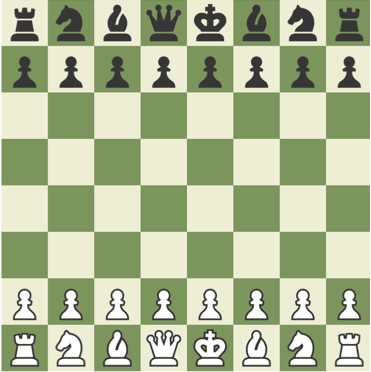
There are 423 trillion possible endgames in chess. You can study those – or you can study just a few principles instead.
The three primary strategies for the opening game aren’t random.
They’re rooted in observable truths from centuries of gameplay.
Now, what might be some opening principles of fundraising strategy?
Here are just a few:
- Control the center → Focus on lifetime value.
Don’t chase transactions. Anchor your work around long-term donor relationships that generate real, lasting value.
This is generally what we call the Pipeline Strategy of fundraising.
This becomes your center. Control it.
- Develop your pieces → Build the right roles and responsibilities.
Are your board members advancing your cause — or cluttering the board?
Is your CEO focused on the greatest priority relationships — or are they way too in the weeds?
Have you empowered your staff to do their best work, building the right risk tolerance for entrepreneurship?
Develop your pieces.
- Protect your king → Invest in stewardship and trust.
Trust is king in fundraising. Your reputation, your values, your relationships — these are your most important pieces.
Lose those, and it doesn’t matter how flashy your next event looks or how emotionally resonant your next appeal sounds. Defend what matters most.
Now, you’ll notice these don’t tell us exactly what to do in every scenario.
That’s because they’re strategic principles.
And just like in chess, a principled player will often outmaneuver a more experienced one.
In fact, according to Muslim legends, part of the founding of chess was to teach a king humility.
It was designed so that even a seemingly weaker or less experienced player — armed with discipline and strategy — could beat a stronger adversary.
That’s a message for all of us in the nonprofit world.
You don’t need the biggest budget.
You don’t need the longest donor list.
You don’t need to win on brute force, either.
You win with strategy.
That’s why this ill-understood topic is so important.
And it’s why TenX Strategies is hosting a special webinar to take it up on November 18 at 12:00 pm Eastern – free for all to join, ask questions, and come away with key, immediately practical insights.
We’ll be joined by Morton Blackwell, the visionary leader behind the Leadership Institute, and Richard Viguerie, who alongside Roger Craver, pioneered new uses for direct response to build lists millions of donors long.
We’ll cover many essential topics in fundraising strategy, including the pipeline approach, brand and positioning, care and feeding, lifetime value, moves management, and more.
And in particular, we’ll seek to answer this key question:
What is the “long game”?
Richard and Morton have built pivotal institutions which have lasted the test of time. That’s because they’ve mastered fundraising strategy. If you’d like to tap this same knowledge – to learn how to truly Go Big for your cause – please join us on November 18.
Register for the webinar here.
Kevin Gentry is a seasoned fundraiser, political strategist, and podcaster passionate about helping great causes 10x their fundraising and effectiveness. In July 2024, he launched TenX Strategies to equip organizations with tools and insights to elevate their impact. With over 40 years of experience, Kevin has built fundraising and marketing capabilities for numerous organizations, including roles as Vice President at Stand Together and Koch, plus leadership positions at the Mercatus Center, Leadership Institute, and Institute for Humane Studies. Through TenX Strategies and his Going Big! podcast, he shares insights on donor engagement and interviews top leaders on their success strategies.